



In today’s fast-growing hygiene market, compact wet wipes packaging formats are gaining strong popularity, especially among female consumers and travel-focused product segments. A portable wet wipes machine for 7-8 sheets pack is specifically designed to meet this demand. This production line integrates precision folding, controlled liquid application, and ultra-compact packaging technology to deliver high-quality small wet wipes products with consistent performance and refined appearance.
The portable wet wipes production line is engineered for small-format packaging, typically producing packs containing seven or eight sheets. The machine features a compact footprint, elegant structural design, and a configuration optimized for stable operation in limited production spaces. Unlike large industrial wet wipes lines, this system emphasizes flexibility, refined product shaping, and efficiency in short-run or specialized product manufacturing.
The production line consists of three primary modules: the unwinding section, the folding and pressing mechanism, and the packaging system. The unwinding system adopts a classic belt-driven feeding structure, known for its mechanical stability and balanced tension control. This configuration enables compatibility with various material weights, including lightweight nonwoven fabrics and specialized tissue materials. As a result, manufacturers can switch between product types without compromising feeding accuracy or production consistency.
One of the most critical innovations in this portable wet wipes machine is its roller-type folding mechanism. Designed specifically for mini wipes, the system performs longitudinal stacking and folding to achieve an N-fold configuration, commonly referred to as the N90 effect. Compared with folding systems used in high-capacity production lines, this compact design offers superior folding stability and improved product shape retention. This makes it particularly suitable for small-size wipes where dimensional precision directly affects packaging quality and user experience.
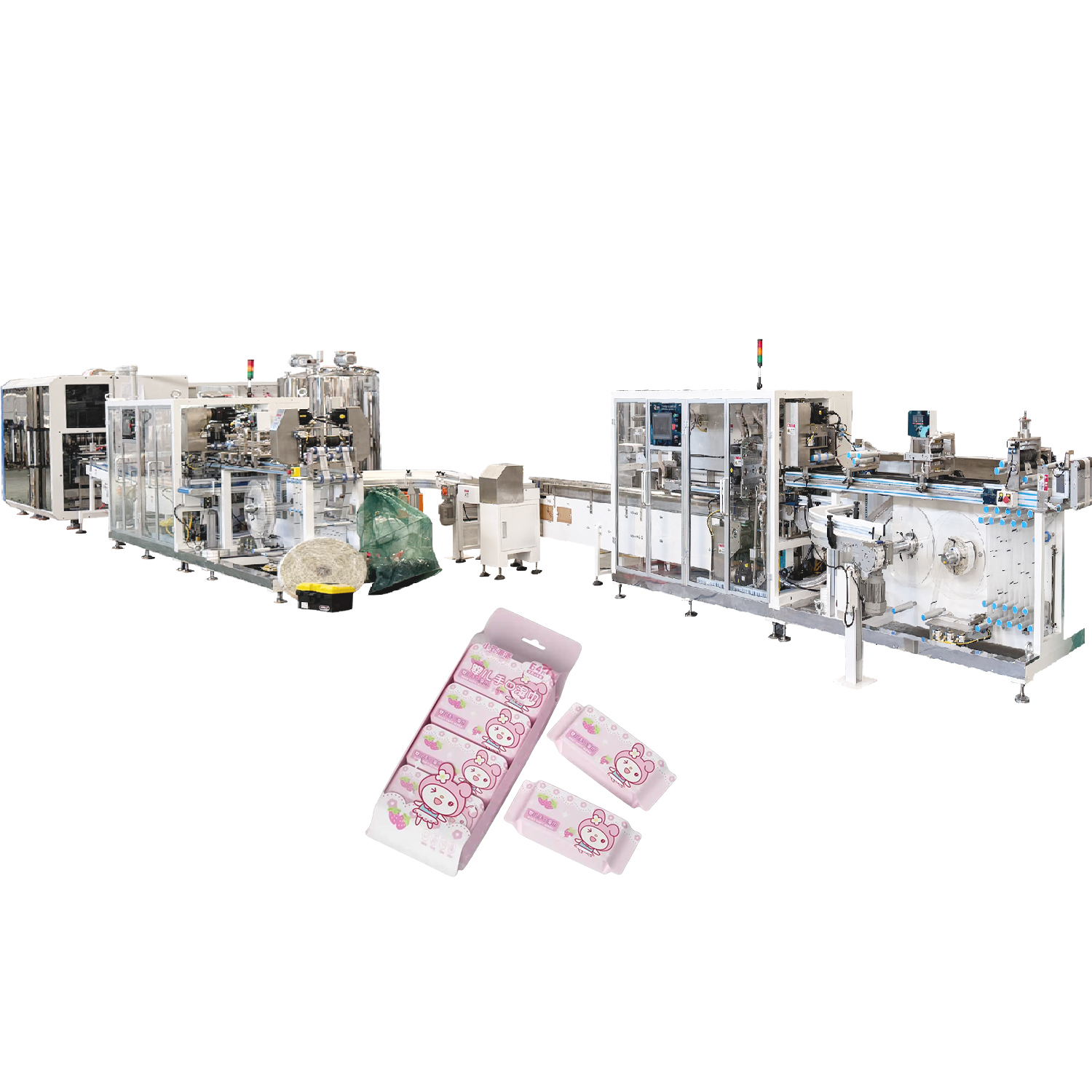
The fabric pulling and liquid application system ensures consistent moisture distribution across each wipe sheet. The machine supports both spray-type and immersion-type liquid application methods. This flexibility allows manufacturers to adapt the process according to material characteristics. For example, nonwoven fabrics may benefit from spray application for controlled absorption, while wet toilet tissue materials may require immersion for deeper liquid penetration. The system is engineered to maintain stable moisture content over time, ensuring product reliability during storage and use.
After liquid application, the material enters the cutting and secondary folding section. The production process first completes the N-fold pattern, followed by a final cross-fold to create the compact pack format. The machine supports a maximum unfolded sheet length of 210 mm, resulting in a final folded length of 105 mm. This standardized size ensures compatibility with ultra-mini packaging solutions and enhances portability for end users.
Once folded, wipes are stacked using an alternating horizontal-vertical layering method. This stacking approach prevents product displacement and ensures neat alignment. The stacked products are then transferred via a distance-controlled conveyor system, enabling seamless integration with various packaging machines. This design supports both conventional large packaging systems and ultra-compact packaging units, providing manufacturers with operational flexibility.
The front-end automatic feeding structure includes a breakage discharge function to remove defective material sections. After stacking, a secondary pressing stage compresses bulky materials such as nonwoven fabrics or moist tissue sheets. This process improves packaging efficiency while enhancing the final product’s visual uniformity.
The ultra-mini packaging system adopts a soft F-type configuration. Products are buffered, spaced, and conveyed at fixed intervals to the packaging inlet. Pre-made pouch insertion is performed through a rotary indexing mechanism, ensuring continuous and efficient packaging operations.
Packaging film is processed into M-type pouches through buffering, cutting, and forming modules. These pouches are installed onto a rotary platform, where wipes are inserted before final sealing. The tail heat-sealing and trimming process ensures that finished packs maintain dual serrated edges and optimal film length, contributing to both aesthetic appeal and functional usability.
A secondary packaging unit is available to group individual mini packs into larger bundles for logistics and retail distribution. the entire portable wet wipes production line is highly customized. It generally supports only minor adjustments within a specific size range, and significant width changes require machine replacement.
The portable wet wipes machine for 7-8 sheets pack represents a specialized solution for manufacturers targeting compact hygiene products. By combining precise folding technology, flexible liquid application, and advanced mini packaging capabilities, this production line delivers consistent product quality while maintaining operational efficiency. For brands focusing on portable hygiene solutions, this system provides a practical and scalable path toward high-value niche product manufacturing.
Email:[email protected]
Add: Henan Communication Industry Area, Jingbei 3rd Road, Zhengzhou, Henan, China